33. Categorization
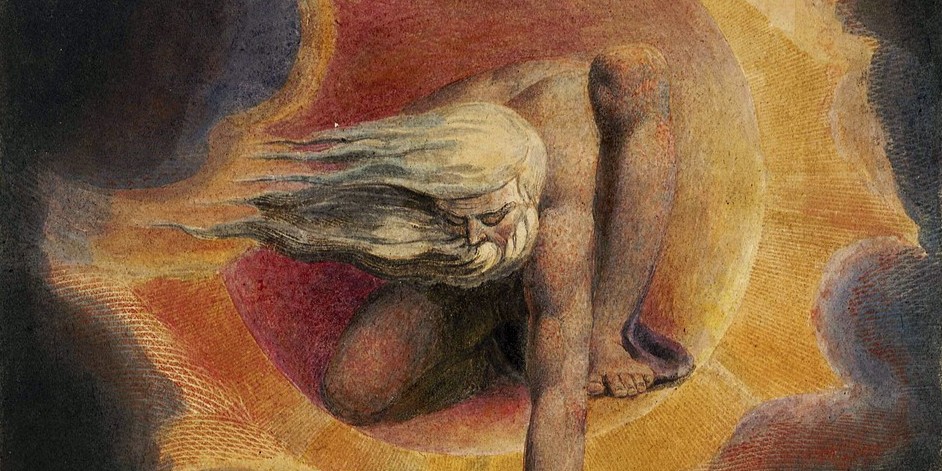
The Ancient of Days, William Blake, 1794
Categorization
When compared to violent revolutions or political manipulation, categorization doesn't seem like a thrilling mechanism of Power. Sorting shelves, entering data, and organizing a closet are all menial tasks that fulfill our brains' basic need to dissect the wealth of information we consume. The monotony of categorization, however, masks its impact. When something is grouped together with a second thing as subsections of a third thing, their relation changes the properties of each. It's a blue short-sleeved shirt independently, but in the context of the closet, it's a summer garment. Or perhaps workout clothes? I suppose that depends on who makes the decision. ¯_(ツ)_/¯
Society has an abundance of data, too. We understand who other people are through identities assumed to be self-ascribed or mutually agreed upon: Race. Sexuality. Region. It gets a little stickier when these seemingly straightforward descriptions are constructed subjectively through the neutral façade of faceless institutions. The motivations for those deemed "mad" in the 17th century were political, not medical. As Foucault[1] argues, this category was crafted to define its opposite: the rational. In turn, the "mad" are subject to control and social exclusion. The mad, the criminal, the vagrant, the foreigner, all condemned because someone decided what they were.
According to contributors on Wikipedia, Foucault's Madness and Civilization is categorized in the subject matter of "insanity." In The Myth of Mental Illness released the very same year, Thomas Szasz[2] also challenged "scientific" categorical ascriptions, yet his work is placed in "anti-psychiatry." Neither of these are technically wrong, but they're not right either. Someone else (read: me) might categorize them both as detailing the use of category as a way to restrict the freedom of others. The point is, even information itself is vulnerable to subjective categorization!
Anyway, before we get into it, we should address the elephant in the room: aren't the main goals of this Index and even my silly video game genre project to categorize? Yes. Yes they are. But your closet reorganization helped you pick out clothes faster, right? While categorization can indeed be used for domination, it can also lead to liberation! It just depends on whether categories themselves are collectively decided upon and include the perspectives of those affected.
Inequity is deeply embedded across a number of hyper-specialized policy areas, and reading the news would suggest a barrage of institutionally supported corruption occurs every day. Neither can be addressed by one person or one conceptual framework alone. If the information on this Index is categorized in a way that demonstrates patterns, it can inform strategy. The overwhelming hopelessness felt by those who want to see a better world could instead be substituted with avenues for direct action that play a decentralized role in a unified mission.
So... let's talk about some of the ways that Categorization is weaponized.
Subjectification
Division
81.01. Michel Foucault. Madness and Civilization. (1961) ↩︎
Thomas Szasz. The Myth of Mental Illness. (1961) ↩︎